
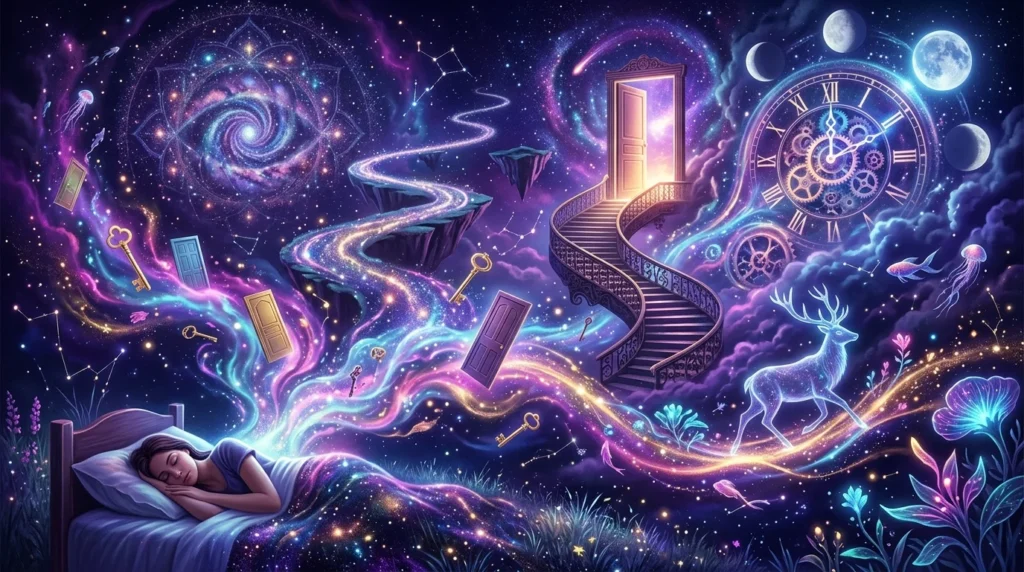
Some dreams fade by breakfast — but this one didn’t. You remember every color, every face, every word, as if it actually happened. When a dream feels that real, your mind is insisting you pay attention. This vivid dream meaning guide explores why some dreams burn themselves into memory — and what yours was highlighting.
You’ll learn the science behind vivid dreaming, the spiritual perspective, and how to read the details your mind refused to let go of.
Have you ever woken up from a dream and needed a few seconds to understand where you were? Maybe you saw a familiar face, walked through a strange place, or felt an emotion so strong that it stayed with you all morning.
A vivid dream can feel more real than an ordinary dream. You may remember colors, voices, faces, and tiny details. Sometimes, the feelings remain long after you open your eyes. You might even wonder if the dream was a warning, a spiritual sign, or a message about something happening in your life.
Understanding vivid dream meaning can help you explore these experiences without becoming afraid of them. Vivid dreams may connect with your emotions, daily worries, memories, sleep patterns, or personal beliefs. They can also inspire you to reflect on your spiritual life.
In this guide, we’ll explore the general meaning of vivid dreams, their psychological causes, their spiritual symbolism, and their possible biblical meaning. You’ll also discover positive and negative interpretations, common vivid dream scenarios, and practical ways to understand what you experienced.
Remember, a powerful dream doesn’t automatically mean something unusual will happen. You can explore its meaning with an open mind while staying grounded in your daily life.
Quick Answer
Vivid dream meaning often relates to strong emotions, recent experiences, stress, memories, or personal beliefs. These dreams can feel real because your mind creates detailed scenes while you sleep. Spiritually and biblically, some people view vivid dreams as meaningful, but they don’t always predict the future or carry a special message.
General Vivid Dream Meaning and Psychological View
From a psychological point of view, vivid dreams are dreams with clear, intense, and memorable details. You might see bright colors, hear familiar voices, recognize specific places, or experience strong feelings such as happiness, fear, love, or sadness.
These dreams can happen during different stages of sleep, although vivid dreams are often associated with rapid eye movement (REM) sleep. During REM sleep, brain activity is high, and many people experience detailed dreams.
Why Do You Have Vivid Dreams?
Your brain continues to process information while you sleep. It works with memories, feelings, and experiences from your waking life. Sometimes, these elements combine in unusual ways.
For example, imagine you spent the day worrying about an important meeting. That night, you dream that you’re standing in front of a large crowd and can’t speak. The dream may reflect your fear of being judged rather than predict a real problem at work.
Several factors may contribute to vivid dreams:
- Stress and anxiety: Strong emotions can influence the content of your dreams.
- Recent experiences: Your mind may replay conversations, events, or places you’ve seen.
- Emotional memories: Important relationships and past experiences may appear in dream scenes.
- Sleep changes: Irregular sleep schedules or waking during a dream can make it easier to remember the details.
- Medications or substances: Some medications and changes in alcohol or other substance use can affect dreaming.
- Physical changes: Illness, fever, and hormonal changes may influence sleep and dream experiences.
What Does It Mean When a Dream Feels Real?
A dream can feel real because your sleeping brain creates a convincing experience. You may feel fear without danger, happiness without an obvious reason, or sadness over an event that never happened.
The emotions may be genuine even when the dream events aren’t real.
For example, dreaming about a loved one who has passed away may bring comfort, grief, or both. This doesn’t prove that the person visited you, but the experience may reflect your love, memories, and longing.
Do Vivid Dreams Reveal Your Subconscious?
Some vivid dreams may reflect thoughts and feelings you haven’t fully considered during the day. However, dream symbols don’t have one fixed meaning for everyone.
Dreaming about a locked door might remind one person of a missed opportunity. For another, it could represent privacy or safety.
Your personal associations matter more than a universal dream dictionary. Consider what happened in the dream and how it connects with your current life.
Spiritual Meaning of Vivid Dreams
For many people, vivid dreams have a spiritual side. They may feel deeply meaningful, encourage personal reflection, or bring questions about faith, purpose, and inner peace.
The spiritual meaning of vivid dreams depends on your beliefs, culture, and personal experiences. Some people view dreams as a way to explore their inner life. Others believe certain dreams may carry guidance from a higher power.
There isn’t one interpretation that applies to everyone.
Vivid Dreams and Spiritual Awareness
A vivid dream may encourage you to pay attention to something you’ve been ignoring. Perhaps you dream about an old friend and realize you miss the relationship. Maybe you see yourself standing beside a quiet river and wake up longing for peace.
These experiences can become opportunities for reflection.
The river doesn’t necessarily symbolize a spiritual message. Instead, the calm feeling may help you recognize that your life has become too busy.
Spiritual reflection can help you understand your feelings without treating every dream as a supernatural sign.
Dreams, Energy, and Emotional Balance
Some spiritual traditions use ideas such as energy, inner balance, and personal transformation to interpret dreams. In these traditions, a peaceful dream might represent harmony, while a disturbing dream might encourage someone to examine an area of life that feels unsettled.
These interpretations are symbolic rather than scientifically established facts.
If you believe in spiritual energy, you might use a vivid dream as a reminder to slow down, pray, meditate, or reconnect with your values. You don’t need to assume that a frightening scene means negative energy surrounds you.
Can Vivid Dreams Be Messages From the Universe?
Some people believe vivid dreams offer guidance from the universe or a higher spiritual source. Others understand them as products of memory, emotion, and imagination.
There is no reliable way to prove that a particular dream is a message from the universe simply because it feels intense.
You can still ask useful questions:
- What emotion stayed with me after waking?
- Does this dream connect with a decision I’m facing?
- Is there something in my life that needs attention?
- Does the dream encourage a choice that agrees with my values?
These questions allow you to explore dream symbolism and intuition without making decisions based on fear.
Vivid Dreams as an Invitation to Reflect
A vivid dream may be meaningful because of what it helps you notice. It might remind you to repair a relationship, rest more, express a hidden feeling, or spend time with your spiritual community.
You can value the experience without claiming to know exactly why it happened.
The most helpful spiritual interpretation is one that encourages wisdom, compassion, peace, and thoughtful action.
Biblical Meaning of Vivid Dreams
The biblical meaning of vivid dreams is an important question for Christians who believe God can communicate through dreams. The Bible contains several accounts in which dreams play a meaningful role. However, it doesn’t teach that every vivid dream comes from God.
Christians also differ in how they understand dreams today. Some believe God may still use them to guide people. Others place greater emphasis on prayer, Scripture, wise counsel, and the ordinary workings of the mind.
A careful biblical interpretation should consider these differences.
God Used Dreams in Some Biblical Stories
In Genesis 37:5–11, Joseph describes dreams that become important in the story of his family. His brothers react strongly to what he shares, and the dreams later form part of the wider biblical narrative.
In Genesis 41:1–32, Pharaoh dreams about cows and grain. Joseph interprets the dreams as a warning about years of plenty followed by years of famine.
These passages show that some dreams had a specific role in biblical history. They don’t establish that every modern dream has a hidden prophecy.
What Does the Bible Say About Dreams?
Job 33:14–18 describes God speaking in different ways, including through dreams and visions during sleep. This passage is often discussed when Christians consider whether dreams can have spiritual significance.
Numbers 12:6 also refers to God making Himself known to a prophet in a vision and speaking in a dream.
These verses provide biblical grounds for believing that dreams can matter in particular circumstances. Still, they shouldn’t be used to label every unusual dream as a divine message.
Ecclesiastes 5:3 connects dreams with many concerns and activities. This offers another perspective: the experiences and worries of daily life may influence what happens in dreams.
Can a Vivid Dream Be a Warning From God?
Some biblical dreams served as warnings. In Matthew 2:12, the wise men are warned in a dream not to return to Herod. In Matthew 2:13, Joseph receives a dream telling him to take the child Jesus and His mother to Egypt.
These are specific events within the biblical story. They don’t mean that a frightening modern dream predicts danger.
If a vivid dream concerns your safety or a major decision, respond with calm judgment. Consider the facts, seek trustworthy advice, and pray if prayer is part of your faith.
Fear alone isn’t proof of a divine warning.
A Christian Approach to Vivid Dream Interpretation
Christians can reflect on vivid dreams while keeping Scripture and sound judgment in view.
First John 4:1 encourages believers to test the spirits rather than believe every spirit. Although the verse addresses spiritual claims, Christians may apply its broader principle of discernment when evaluating experiences they believe might have spiritual meaning.
James 1:5 encourages those who lack wisdom to ask God for it.
Together, these passages support a thoughtful approach: seek wisdom, avoid rushing to conclusions, and consider whether an interpretation encourages love, truth, patience, and responsible choices.
A vivid dream may prompt prayer and reflection, but it should not replace Scripture, practical evidence, or wise counsel.
If the dream has no clear biblical connection, be honest about that. Its meaning may be personal and symbolic rather than a direct teaching from the Bible.
Positive Interpretations of Vivid Dreams
Vivid dreams can sometimes leave you feeling hopeful, peaceful, or inspired. Even when the dream doesn’t have a supernatural meaning, it may help you notice something valuable about your life.
Here are some positive ways to understand these experiences.
Greater Emotional Awareness
A vivid dream may bring a feeling to the surface that you’ve been too busy to notice. You might dream about a childhood home and wake up thinking about family, comfort, or belonging.
The dream can help you recognize what you miss or value.
A Desire for Change
Dreaming about a new home, an open road, or a bright sunrise may remind you of growth, freedom, or fresh possibilities. These symbols don’t guarantee that a major change is coming.
Instead, they may reflect your hopes or your readiness to make a change.
Comfort Through Memories
A dream about someone you love may bring warmth and reassurance. If the person has passed away, the dream may help you reconnect with treasured memories.
You can appreciate that comfort without needing to prove what caused it.
Renewed Faith and Hope
A peaceful dream involving prayer, light, or a place of worship may encourage you to spend more time with your faith.
For a Christian, it may become an opportunity to pray, read Scripture, or seek peace during a difficult season.
A positive vivid dream can serve as a reminder of what matters to you. Let it encourage healthy choices instead of creating expectations about the future.
Negative Interpretations of Vivid Dreams
Not every vivid dream feels comforting. Some involve falling, being chased, losing a loved one, or facing an unknown danger. You may wake with a racing heart and wonder if the dream means something bad will happen.
In most cases, a frightening dream is not proof of future danger.
Stress and Unresolved Worries
A dream about being chased may reflect pressure or a situation you would rather avoid. A dream about arriving late may connect with fear of failure or a lack of control.
These are possible interpretations, not fixed rules.
Ask yourself if a recent problem has left you feeling overwhelmed. Sometimes, the dream becomes easier to understand when you consider the stress you’ve been carrying.
Fear of Losing Control
Dreams involving broken objects, missed trains, or unfamiliar places may reflect uncertainty. You might be facing a change at work, dealing with family tension, or waiting for an important answer.
The dream may express how uncertain you feel rather than reveal what will happen.
Disturbing Spiritual Imagery
A vivid dream involving darkness, threatening figures, or religious symbols may feel especially upsetting if you’re a person of faith.
However, such imagery doesn’t prove that you’re under spiritual attack or that God is angry with you. Dreams can combine memories, fears, and images in unexpected ways.
If prayer comforts you, take time to pray. You can also talk with a trusted, balanced spiritual leader.
Don’t let a dream convince you that disaster is certain. Focus on what you know, what you can control, and the steps that help you feel safe.
If nightmares happen often, disturb your sleep, or affect your daily life, consider speaking with a healthcare professional.
Common Vivid Dream Scenarios and Their Meanings
The details of a vivid dream can help you explore its possible meaning. Your emotions, surroundings, and recent experiences all matter. The following interpretations are possibilities, not universal rules.
Dreaming About Someone You Love
A vivid dream about your partner, parent, child, or close friend may reflect your emotional connection with that person. If the dream feels warm, it could bring up feelings of love, gratitude, or closeness.
If you argue with the person in your dream, you may be processing tension or worrying about the relationship. It doesn’t automatically mean a disagreement is coming.
Think about your current connection with the person rather than treating the dream as a prediction.
Reflection question: Is there something I want to express or improve in this relationship?
Having a Vivid Dream About a Deceased Loved One
Dreaming vividly about someone who has died can feel powerful. You might hear their voice, see their face clearly, or feel as if you’re spending real time together.
Such dreams may be connected with grief, memory, love, or a wish for comfort. Some people interpret them spiritually, while others understand them as part of the mind’s way of processing loss.
You can treasure the experience without deciding that it proves contact with the afterlife.
Reflection question: What memory or feeling did this dream bring back to me?
Seeing Bright Colors and Beautiful Places
You may dream about a clear blue sky, a green garden, a golden light, or a peaceful beach. These scenes may connect with feelings of hope, safety, freedom, or rest.
Your personal associations matter. A beach might feel peaceful to one person but remind another of a difficult event.
If you wake feeling calm, consider what in your daily life gives you a similar sense of peace. Perhaps you need more time outdoors or a break from your usual routine.
Reflection question: What part of this dream made me feel most peaceful?
Having a Vivid Dream About Falling
A falling dream can feel frightening because you may experience a sudden drop, a sense of danger, or a strong physical reaction.
Symbolically, falling may remind you of uncertainty or a fear of losing control. For example, you might be starting a new job or facing a difficult choice.
But falling dreams don’t always have a psychological message. They can also occur as part of ordinary sleep experiences.
Look at what is happening in your life before assuming the dream represents failure.
Reflection question: Where in my life do I feel uncertain or unsupported right now?
Dreaming About Being Chased
In this dream, someone or something may follow you through a street, building, forest, or unfamiliar town. You might hide, run, or struggle to escape.
A chase dream may reflect stress, pressure, or a problem you don’t feel ready to face. The person chasing you could represent a real concern, but it doesn’t have to represent a specific individual.
Try to identify the emotion that felt strongest. Fear, anger, and helplessness may point to different concerns.
Reflection question: Is there a situation I keep avoiding because it feels difficult?
Having a Vivid Dream About Water
Water can appear as a calm lake, a flowing river, heavy rain, or a rough ocean. Its meaning may depend on how you experience it.
Clear, calm water might remind you of peace or emotional clarity. Rough water may connect with stress or uncertainty. However, water has different meanings across cultures and personal experiences.
If you dream about drowning or flooding, don’t assume that danger is coming. Consider whether you feel overwhelmed by responsibilities or emotions.
Reflection question: Did the water make me feel safe, peaceful, frightened, or powerless?
Dreaming About God, Angels, or Religious Symbols
A vivid dream involving God, angels, a church, or prayer may feel deeply personal. For someone with Christian beliefs, it may prompt reflection on faith, hope, forgiveness, or a need for guidance.
Still, the presence of a religious symbol doesn’t prove that a dream came directly from God. It may also reflect recent prayers, Bible reading, church experiences, or personal concerns.
You can pray about the dream and compare any interpretation with biblical teaching and wise counsel.
Reflection question: Does this dream encourage me toward love, wisdom, humility, and peace?
Having the Same Vivid Dream Repeatedly
Recurring vivid dreams can become tiring, especially when they involve the same frightening scene or unresolved situation.
Repeated dreams may be associated with ongoing stress, emotional concerns, difficult memories, or disrupted sleep. Their exact meaning depends on the person and the circumstances.
You don’t need to search for a hidden prediction each time the dream returns. Instead, note what changes, what stays the same, and how you feel before bed.
If recurring nightmares affect your rest or daily life, professional support may help.
Reflection question: What concern keeps returning in my waking life, and what practical step could help me address it?
What to Do After a Vivid Dream
You don’t need to solve every dream as soon as you wake up. A calm, simple approach can help you understand the experience without becoming anxious.
- Write it down: Record the main events, people, places, and images before you forget them.
- Name your feelings: Note whether you felt peaceful, afraid, excited, sad, or confused.
- Check recent stress: Consider whether work, relationships, health concerns, or major changes may have influenced the dream.
- Reflect on personal meaning: Ask what the images remind you of instead of relying on a fixed dream dictionary.
- Pray or meditate: If it fits your beliefs, take a quiet moment to seek wisdom and peace.
- Talk to someone you trust: A supportive friend, counselor, or balanced spiritual leader may help you see the experience more clearly.
If vivid dreams become frequent and distressing, affect your ability to sleep, or follow a traumatic event, consider speaking with a qualified healthcare professional.
You can learn from a dream without allowing it to control your decisions.
Frequently Asked Questions About Vivid Dream Meaning
Is a vivid dream a warning?
A vivid dream isn’t automatically a warning about the future. It may reflect stress, memories, emotions, or concerns that deserve your attention. Some religious traditions believe certain dreams can carry spiritual meaning, but intensity alone doesn’t prove that a dream is a divine warning. Look at real-life evidence before making important decisions.
Is having vivid dreams good or bad?
Vivid dreams can be pleasant, frightening, or emotionally neutral. A peaceful dream may leave you feeling encouraged, while a nightmare may leave you anxious. Neither experience automatically predicts good or bad events. Your sleep quality, recent experiences, and emotional state may help explain why the dream occurred. Pay attention if disturbing dreams repeatedly affect your rest.
What is the spiritual meaning of vivid dreams?
The spiritual meaning of vivid dreams depends on your faith, culture, and personal understanding. Some people see them as invitations to reflect, pray, or pay attention to their values. Others understand them as ordinary mental experiences. You can explore a dream’s spiritual significance without assuming that every image is a supernatural message.
What is the biblical meaning of vivid dreams?
The Bible includes meaningful dreams in passages such as Genesis 37:5–11 and Genesis 41:1–32. These accounts show that dreams sometimes played a role in biblical history. However, the Bible doesn’t say every vivid dream comes from God. Christians differ on how modern dreams should be interpreted, so prayer, Scripture, discernment, and wise counsel can help.
Why do my vivid dreams feel so real?
Vivid dreams may feel real because your brain creates detailed scenes, sounds, emotions, and sensations during sleep. Dreams often occur during REM sleep, when brain activity is high. If you wake during or soon after a dream, you may remember its details more clearly. Strong emotions can also make the experience feel especially convincing.
Why do I keep having vivid dreams every night?
Frequent vivid dreams may be linked to stress, changes in sleep routines, medications, illness, or other factors affecting sleep. You may also remember more dreams if you wake during the night. Keeping a sleep diary can help you notice patterns. If the dreams cause ongoing distress, poor sleep, or daytime difficulties, speak with a healthcare professional.
Conclusion:
Understanding vivid dream meaning begins with curiosity rather than fear. A dream that feels real may connect with your memories, emotions, current worries, or spiritual beliefs. Its intensity can make it memorable, but it doesn’t guarantee that the dream predicts the future.
Psychology can help you explore how your mind processes daily experiences. Spiritual reflection may help you consider your values and inner life. The Bible offers examples of meaningful dreams while leaving room for careful discernment about modern experiences.
If a dream stays with you, write it down and ask what feelings it brought to the surface. If you’re a Christian, you might pray: God, give me wisdom to understand my feelings, peace when I feel afraid, and guidance to make thoughtful choices.
Your dream can be an opportunity for reflection, not a reason to live in fear.
Dream meanings are personal and symbolic, not guaranteed predictions. Consider your own experiences, beliefs, and circumstances when interpreting them.